When Is the Best Time of Year for Peatland Restoration?
Peatlands play a key role when it comes to protecting our environment, storing carbon, supporting biodiversity and regulating water movement across the landscape. However, many peatland habitats have been damaged by drainage, erosion and historical land management practices, making restoration increasingly important.
One of the most common questions when planning a restoration project is when is the best time of year for peatland restoration? While autumn and winter can provide favourable conditions for certain activities, successful restoration depends on rainfall, ground conditions, site accessibility and the methods being used. Understanding these seasonal factors can help landowners, environmental organisations and contractors plan effective, sustainable peatland restoration projects.
Why Does Timing Matter for Peatland Restoration?
Choosing the right time for peatland restoration plays an important part in the success of a project. Peatlands are sensitive environments, and seasonal changes affect water levels, vegetation growth and the stability of the ground. Restoration often involves activities such as blocking drainage channels, rewetting degraded peat, stabilising exposed surfaces and encouraging the regeneration of native vegetation.
These activities require different conditions. For example, increasing rainfall can support peatland rewetting, while installing erosion control materials may be easier during periods when ground conditions allow safe access. Timing is also important for protecting existing habitats. Machinery and repeated foot traffic can damage fragile peat surfaces, particularly when the ground is heavily saturated.
Wildlife breeding seasons, vegetation establishment and site-specific environmental restrictions must also be considered. Careful planning helps minimise disturbance, reduce environmental damage and improve the long-term effectiveness of restoration work.
Is Autumn a Good Time for Peatland Restoration?
Autumn is often considered a suitable period for peatland restoration, particularly for projects involving water management and erosion control. As temperatures begin to fall and rainfall generally increases, conditions can become more favourable for restoring moisture levels within degraded peat.
This can be beneficial for projects involving drain blocking and rewetting, where retaining water is essential to restoring the natural functioning of the peatland. Cooler temperatures can also help reduce moisture loss from exposed peat surfaces, limiting further drying and degradation.
Autumn may provide opportunities to install erosion control materials before the wettest winter weather arrives, helping protect vulnerable areas against rainfall and surface water movement.
However, conditions vary considerably between sites. Prolonged heavy rainfall can make access difficult, while saturated ground may be vulnerable to damage. Restoration work should therefore be scheduled according to local conditions rather than relying solely on the calendar.
Can Peatland Restoration Be Carried Out During Winter?
The simple answer is yes, peatland restoration during winter is possible, and the season can be particularly useful for certain water-management activities. Higher rainfall and reduced evaporation can support efforts to raise water tables and restore wetter conditions across previously drained peatland. Drain blocking, channel management and other rewetting activities may be undertaken during winter where site conditions and access arrangements allow.
However, winter also presents challenges. Heavy rainfall, snow, frozen ground and shorter daylight hours can restrict working time and make remote restoration sites difficult to access.
Using heavy machinery on saturated peat can cause rutting, compaction and additional damage to already vulnerable habitats.
For this reason, restoration teams must carefully assess ground conditions and choose appropriate equipment and installation methods. Lightweight erosion control products can offer practical advantages on remote sites where transporting heavy materials or machinery would be difficult.
Ultimately, winter restoration can be effective, but activities should be planned around weather conditions, environmental restrictions and safe site access.
When Is the Best Time to Rewet Peatland?
Rewetting is one of the most important elements of peatland restoration because healthy peatlands depend on maintaining sufficiently high water tables. When peat becomes excessively dry, it can start to degrade, releasing stored carbon and becoming increasingly vulnerable to erosion.
Restoring water levels helps slow this degradation and creates conditions that support the recovery of peat-forming vegetation, including sphagnum moss. Autumn and winter can be particularly beneficial periods for peatland rewetting, as increased rainfall and lower evaporation rates help replenish moisture within the peat.
However, the most appropriate time depends on existing drainage conditions, water availability and the restoration techniques being used.
Rewetting commonly involves blocking artificial drains, managing eroded channels and slowing water movement across damaged areas.
Although these activities can be undertaken at different times of year, the objective is to maintain suitable water levels throughout the seasons rather than relying on temporary winter saturation.
What Weather Conditions Are Best for Peatland Restoration?
The most suitable weather conditions depend on the type of restoration work being carried out. Cool, relatively settled weather can provide favourable working conditions for installing erosion control materials, particularly where access to remote areas is required.
Moderate rainfall can help maintain moisture within the peat, while avoiding the difficulties associated with prolonged heavy rain. For projects involving vegetation establishment, it is important you have sufficient moisture to support plant survival and encourage regeneration.
However, intense rainfall can increase surface water flow, disturb exposed peat and make installation work more challenging. Strong winds can also create difficulties when handling lightweight geotextiles and erosion control blankets across exposed upland landscapes.
For this reason Restoration teams should consider both immediate weather forecasts and longer-term seasonal conditions when planning their activities.The aim is to complete the necessary work safely while minimising disturbance to the surrounding peatland.
How Does Rainfall Affect Peatland Restoration?
Rainfall plays a key role in restoring and maintaining healthy peatland habitats.
Natural peatlands depend on consistently wet conditions, which help preserve organic material and support the development of peat-forming vegetation.
Where drainage and erosion have lowered water levels, rainfall can help replenish moisture once suitable restoration measures have been implemented. However, heavy rainfall can also accelerate erosion on exposed peat surfaces, particularly where vegetation has been lost and drainage channels allow water to flow rapidly downhill.
This can wash away valuable peat, deepen erosion channels and make natural regeneration more difficult. Effective peatland erosion control helps slow surface water movement, retain sediment and protect vulnerable areas while vegetation becomes established.
Combining water-management measures with suitable erosion control materials can help create more stable conditions for long-term peatland recovery.
What Methods Are Used in Peatland Restoration?
Peatland restoration involves several techniques designed to restore natural water levels, reduce erosion and encourage vegetation regeneration.
Common approaches include blocking artificial drainage channels, reprofiling eroded peat hags, stabilising exposed surfaces and introducing suitable native vegetation.
At HBB Geosales, we have developed a range of innovative, lightweight products designed to support peatland restoration while reducing some of the practical challenges associated with working in remote and sensitive environments.
HBB Coir Geotextiles
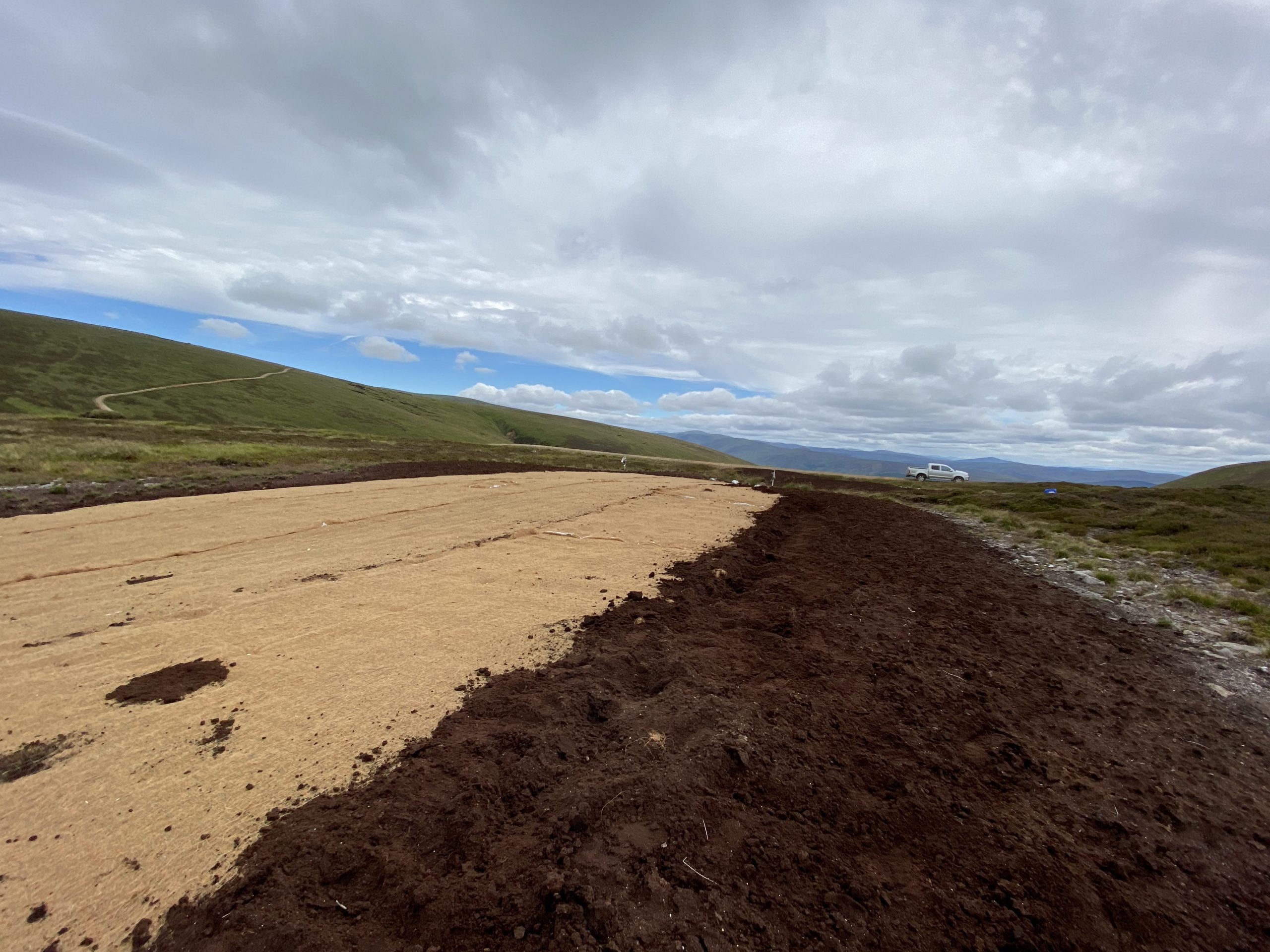
Our HBB Coir Geotextiles provide immediate erosion protection for reprofiled peat hags and exposed areas. Available in three weight options to accommodate different slope gradients, water velocities and weather conditions, these natural materials help reduce further peat loss, encourage sediment retention and create favourable conditions for sphagnum moss and other vegetation to regenerate. Depending on site conditions, our coir geotextiles have an expected degradation period of approximately three to five years.
HBB Coir Blankets
Our HBB Coir Blankets provide protective coverage for exposed peat, helping reduce erosion and moisture loss. Manufactured from 100% coir fibre, supported by jute netting and cotton stitching, the blankets offer strength while remaining flexible enough to follow peatland contours.
Their water absorption and mulching properties help protect exposed peat against drying out. Supplied in lightweight rolls measuring 2.4 metres wide by 50 metres long, they can be installed efficiently across larger areas.
HBB Coir Logs
Our HBB Coir Logs are designed for placement across eroded peatland channels, helping slow water movement, retain sediment and support rewetting. Manufactured from natural coir fibre, these biodegradable products provide a practical alternative for suitable small-scale damming and erosion control applications.
They are available in different diameters and lengths, with optional preformed planting cavities to support vegetation establishment. You can learn more about these products on our RePeat Restoration Matting product page.
Summary: Choosing the Best Time for Peatland Restoration
So, when is the best time of year for peatland restoration?
Autumn and winter are often important periods for restoration, particularly where increasing rainfall and reduced evaporation can support rewetting and water-table recovery. However, there is no single season suitable for every activity. Erosion control installation, vegetation establishment, site access and wildlife protection may require different working windows.
Successful restoration depends on understanding the conditions of each site and selecting appropriate methods and materials to support long-term recovery.
How HBB Geosales Can Help with Peatland Restoration
At HBB Geosales, we recognise the environmental importance of restoring degraded peatlands and the practical challenges associated with conventional restoration techniques.
Our innovative range of coir geotextiles, coir blankets and coir logs provides natural erosion control solutions designed to help stabilise exposed peat, retain sediment and encourage vegetation regeneration. Lightweight and practical to install, these products can help reduce the need to transport heavy materials into sensitive and difficult-to-access locations.
Whether you’re planning a peatland rewetting project, restoring eroded peat hags or protecting exposed peat surfaces, our team can help you identify suitable materials for your requirements. Contact HBB Geosales today to discuss your peatland restoration project or request further product information.
Call 01307 461499, email sales@hbbgeosales.co.uk, or complete the enquiry form on our Contact Us page.